
Published February 2026
PURPOSE
The Bayanihan Pulse is a research initiative dedicated to understanding the Philippine volunteer sector. By analyzing the experiences of current volunteers, we aim to design more effective developmental programs and inspire a new generation of Filipinos to contribute to nation-building. This study also serves as an ongoing baseline for future research to monitor the progress and growth of the volunteer sector.
SCOPE OF THE STUDY AND METHODOLOGY
Conducted online between June 17 and July 29, 2024, this study gathered responses from 406 participants. The survey was distributed via iVolunteer’s Facebook Page, volunteer-focused Facebook groups, and digital newsletters sent to iVolunteer website users. Due to its digital nature, the data primarily reflects the perspectives of populations with active access to these specific online platforms.
As a survey organized by iVolunteer Philippines, certain biases may exist toward its existing network of individuals who already possess an interest in volunteering. The data regarding institutional awareness for iVolunteer Philippines may be skewed or disproportionately influenced by the current respondent profile.
This study encompasses the full spectrum of volunteerism as defined by iVolunteer Philippines, ranging from informal acts of kindness to structured, long-term engagements within organized non-profit organizations.
EXECUTIVE SUMMARY
Philippine volunteerism is deeply rooted in Bayanihan, driven by a desire for social change. The modern volunteer landscape is characterized by a narrowing gender gap and a strong youth presence, though commitment levels vary by age.
- Gender: Participation is becoming more balanced; the female-to-male ratio has shifted from 3:1 in 2015 to roughly 3:2 today.
- Age: While the 21- 30 age group provides the highest volume of volunteers (36%), the “participation rate” increases with age. Engagement exceeds 85% for respondents over 40, suggesting that career and financial stability foster more consistent commitment.
- Socioeconomics: Volunteerism is not a luxury of the wealthy. The largest income-earning segment of volunteers earns below ₱30,000 monthly. Students and full-time employees make up the bulk of the sector, demonstrating that Filipinos prioritize service despite academic or professional demands.
The study reveals a “sacrificial” model of service where physical presence is the primary contribution.
- Time over Treasure: 81.2% of active volunteers contribute their time, while only 10.3% prioritize financial donations.
- Frequency: Engagement is largely episodic; 41.5% volunteer irregularly, often viewing service as a “residual” activity performed only when they have surplus free time (rated 6.11/7.0).
Despite 90% of respondents viewing volunteerism as “Important” or “Very Important,” structural hurdles persist:
- Primary Challenges: The top barriers are Schedule (57.4%), Financial Challenges (52.2%), and Logistics/Transportation (48.5%). Many volunteers self-fund their service, covering their own meals and travel.
- Top Motivators: The leading motivation is the desire to share skills and resources (38.2%), followed by the drive to create social impact and strengthen community engagement.
- The “Sense of Purpose”: While the importance of volunteering is seen through a societal lens, the primary benefit is personal: 34.7% of respondents report that volunteering gives them a deeper sense of purpose.
For service to become a consistent habit rather than an irregular act, organizations must address structural barriers, such as logistical costs and scheduling, and expand the narrative of volunteerism from not just event-driven service to a more integrated, everyday act of kindness.
DEMOGRAPHICS OF THE RESPONDENTS
The study gathered 406 responses, providing a balanced perspective between active volunteers and non-volunteers. Of the total, 282 (69.5%) are currently engaged in volunteer work, while 124 (30.5%) are not.
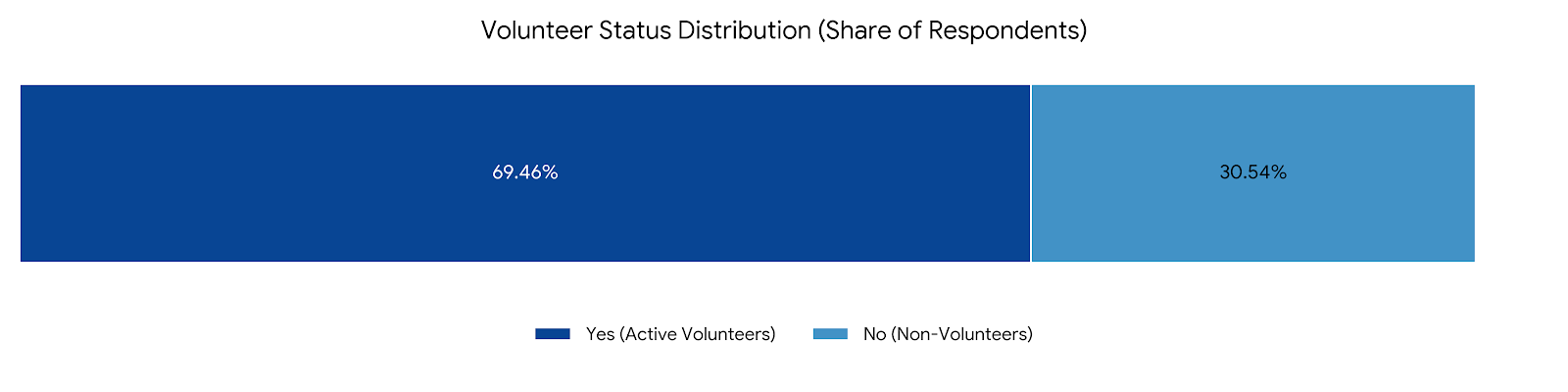
| Volunteer Status | Responses | Percentage |
| Yes (Active Volunteers) | 282 | 69.46% |
| No (Non-Volunteers) | 124 | 30.54% |
To ensure a nuanced analysis, the following metrics are utilized in our demographic reporting:
- Volunteer Percentage: The share of a specific group relative to the total number of volunteer respondents.
- Participation Rate: The percentage of volunteers within a specific demographic (showing how “active” a specific group is to volunteer).
Gender
While the survey reached more women (58.8%) than men (39.4%), the participation rate reveals that men show a slightly higher rate at 75.9% compared to 71.6% for women. This reflects a shifting demographic; the 2015 volunteer landscape study[1] reported a 3:1 female-to-male ratio, whereas current data shows a narrower 3:2 gap.
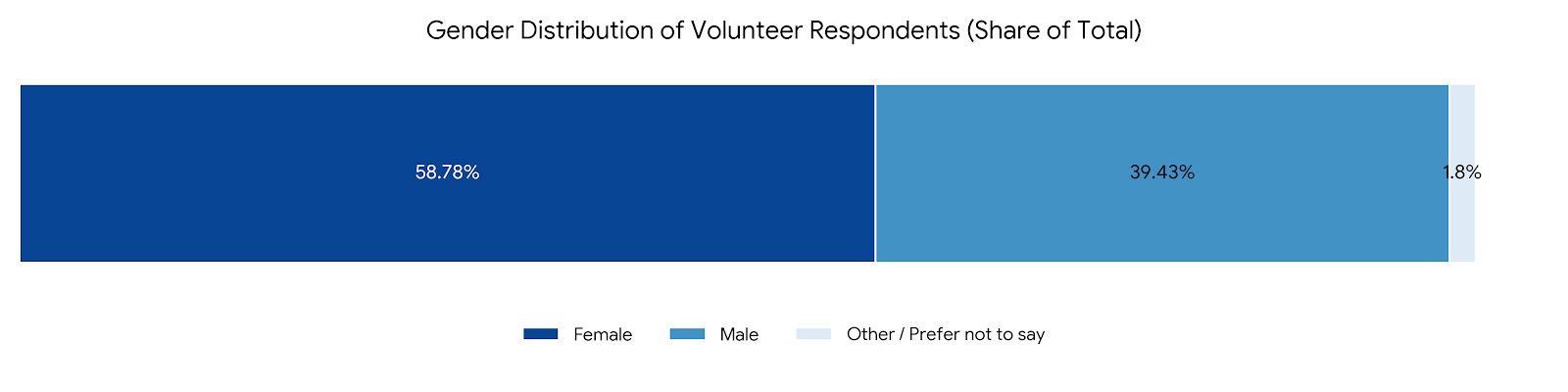
| Gender | Total Demographics | Volunteer Respondents | Volunteer Percentage | Participation Rate |
| Female | 229 | 164 | 58.78% | 71.62% |
| Male | 145 | 110 | 39.43% | 75.86% |
| Other / Prefer not to say | 32 | 8 | 1.80% | 25.00% |
Age
Filipino youth are the backbone of the volunteer sector based on the respondents. Specifically, the 21–30 age group leads at 36%, followed by those 31–40 (22%) and the youth aged 20 and below (19%). However, a “participation gap” exists between the generations. While the youngest cohort (under 21) has a participation rate of 59%, engagement scales significantly with age, exceeding 85% for all groups over 40. This suggests that while the youth provide the initial momentum, older individuals – likely benefiting from greater career and financial stability – demonstrate a more consistent and deeply integrated commitment to service.
| Age Group | Total Demographics | Volunteer Respondents | Volunteer Percentage | Participation Rate |
| Less than 21 | 88 | 52 | 19% | 59% |
| 21–30 | 142 | 101 | 36% | 71% |
| 31–40 | 62 | 47 | 22% | 76% |
| 41–50 | 49 | 43 | 18% | 88% |
| 51–60 | 35 | 30 | 13% | 86% |
| Above 60 | 7 | 6 | 3% | 86% |
Location
Geographically, the study reflects a strong concentration in urban centers, with the National Capital Region (NCR) accounting for 45.5% of the sample. This is followed by CALABARZON (Region 4A) (18.3%) and the Davao Region (Region 11) (7.7%). This distribution likely mirrors the “digital footprint” of the study’s outreach, as these regions align with the primary user bases of platforms like iVolunteer Philippines. While the data provides a robust look at urban volunteerism, it also highlights an opportunity to further expand digital outreach and recruitment into other regions to capture a more diverse national profile.
| Region | Total Demographics | Volunteer Respondents | Volunteer Percentage | Participation Rate |
| NCR | 160 | 107 | 45.53% | 66.88% |
| CARAGA | 5 | 4 | 1.70% | 80.00% |
| Region 1 | 6 | 5 | 2.13% | 83.33% |
| Region 2 | 3 | 3 | 1.28% | 100.00% |
| Region 3 | 24 | 17 | 7.23% | 70.83% |
| Region 4-A | 62 | 43 | 18.30% | 69.35% |
| MIMAROPA | 1 | 0 | 0.00% | 0.00% |
| Region 5 | 6 | 6 | 2.55% | 100.00% |
| Region 6 | 5 | 5 | 2.13% | 100.00% |
| NIR | 0 | 0 | – | – |
| Region 7 | 8 | 6 | 2.55% | 75.00% |
| Region 8 | 3 | 3 | 1.28% | 100.00% |
| Region 9 | 3 | 3 | 1.28% | 100.00% |
| Region 10 | 6 | 6 | 2.55% | 100.00% |
| Region 11 | 23 | 18 | 7.66% | 78.26% |
| Region 12 | 3 | 3 | 1.28% | 100.00% |
| Region 13 | 2 | 2 | 0.85% | 100.00% |
| BARMM | 4 | 4 | 1.70% | 100.00% |
Employment Status
Students account for 38.0% of respondents, followed closely by full-time employees at 35.8%. This near-equal distribution suggests that Filipinos prioritize service despite the significant demands of academic and professional life. It also highlights the dual nature of volunteerism in the Philippines, where both educational institutions and workplaces serve as vital platforms for civic engagement and nation-building.
| Employment Status | Total Demographics | Volunteer Respondents | Volunteer Percentage | Participation Rate |
| Student | 160 | 106 | 37.99% | 66.25% |
| Employed full time (40+ hrs/wk) | 137 | 100 | 35.84% | 72.99% |
| Self-employed | 25 | 22 | 7.89% | 88.00% |
| Employed part time (<40 hrs/wk) | 22 | 19 | 6.81% | 86.36% |
| Unemployed | 20 | 16 | 5.73% | 80.00% |
| Homemaker | 10 | 8 | 2.87% | 80.00% |
| Retired | 7 | 6 | 2.15% | 85.71% |
| Unable to work | 2 | 2 | 0.72% | 100.00% |
Educational Attainment
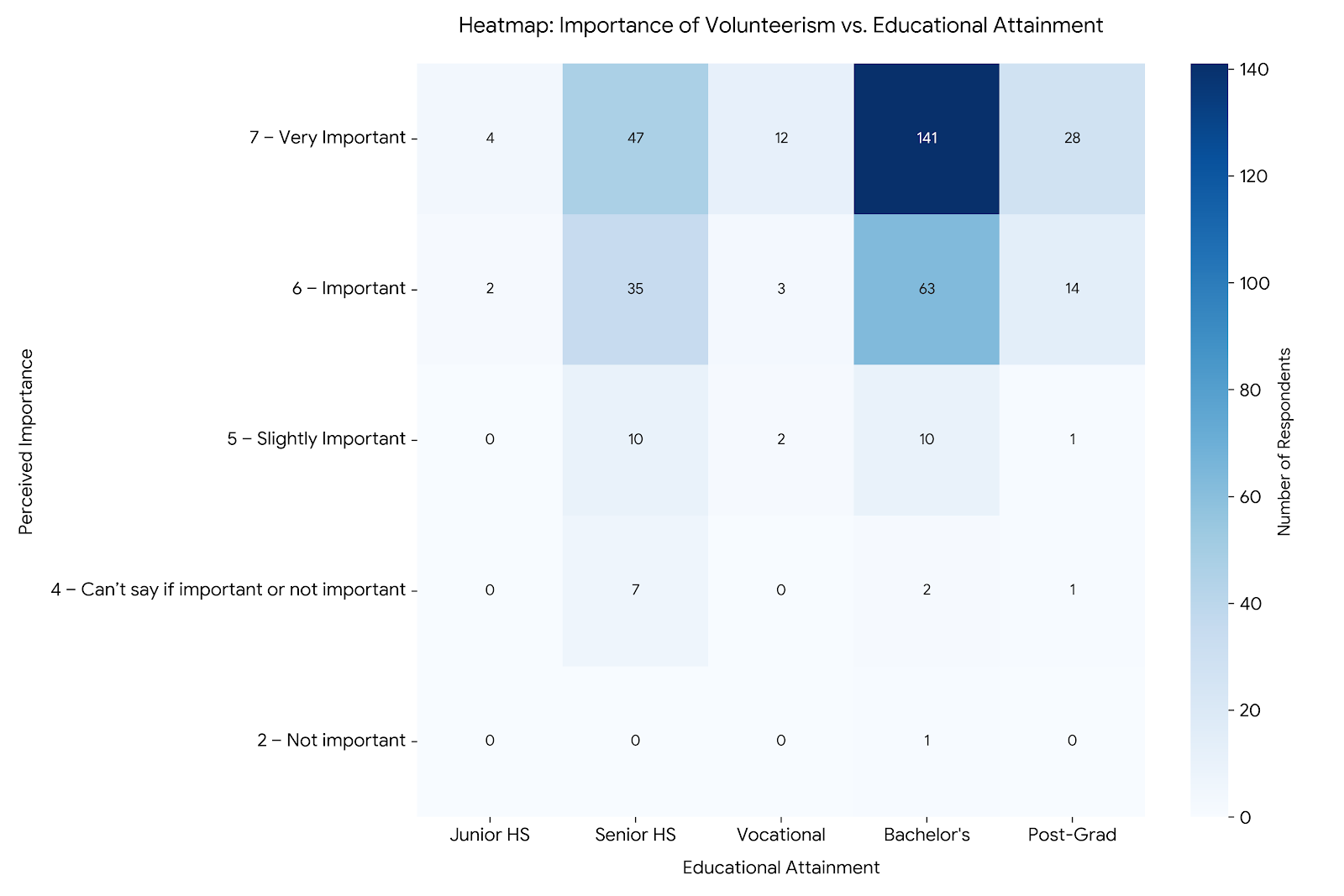
The study highlights a strong link between educational attainment and civic participation. College graduates represent the largest segment of the volunteer population at 56.3%, followed by Senior High School students at 15.6%. This distribution suggests that volunteerism is highly prevalent among individuals with higher educational access, likely due to a greater exposure to social issues and more robust institutional connections to organized service.
| Educational Attainment | Total Demographics | Volunteer Respondents | Volunteer Percentage | Participation Rate |
| Post Graduate / Masters / Doctorate | 44 | 37 | 13.26% | 84.09% |
| Bachelor’s / College Degree | 217 | 160 | 57.35% | 73.73% |
| Senior High School | 99 | 62 | 22.22% | 62.63% |
| Vocational | 17 | 14 | 5.02% | 82.35% |
| Junior High School | 6 | 6 | 2.15% | 100.00% |
| Gradeschool | 0 | 0 | – | – |
| Lower or never been to school | 0 | 0 | – | – |
Monthly Income
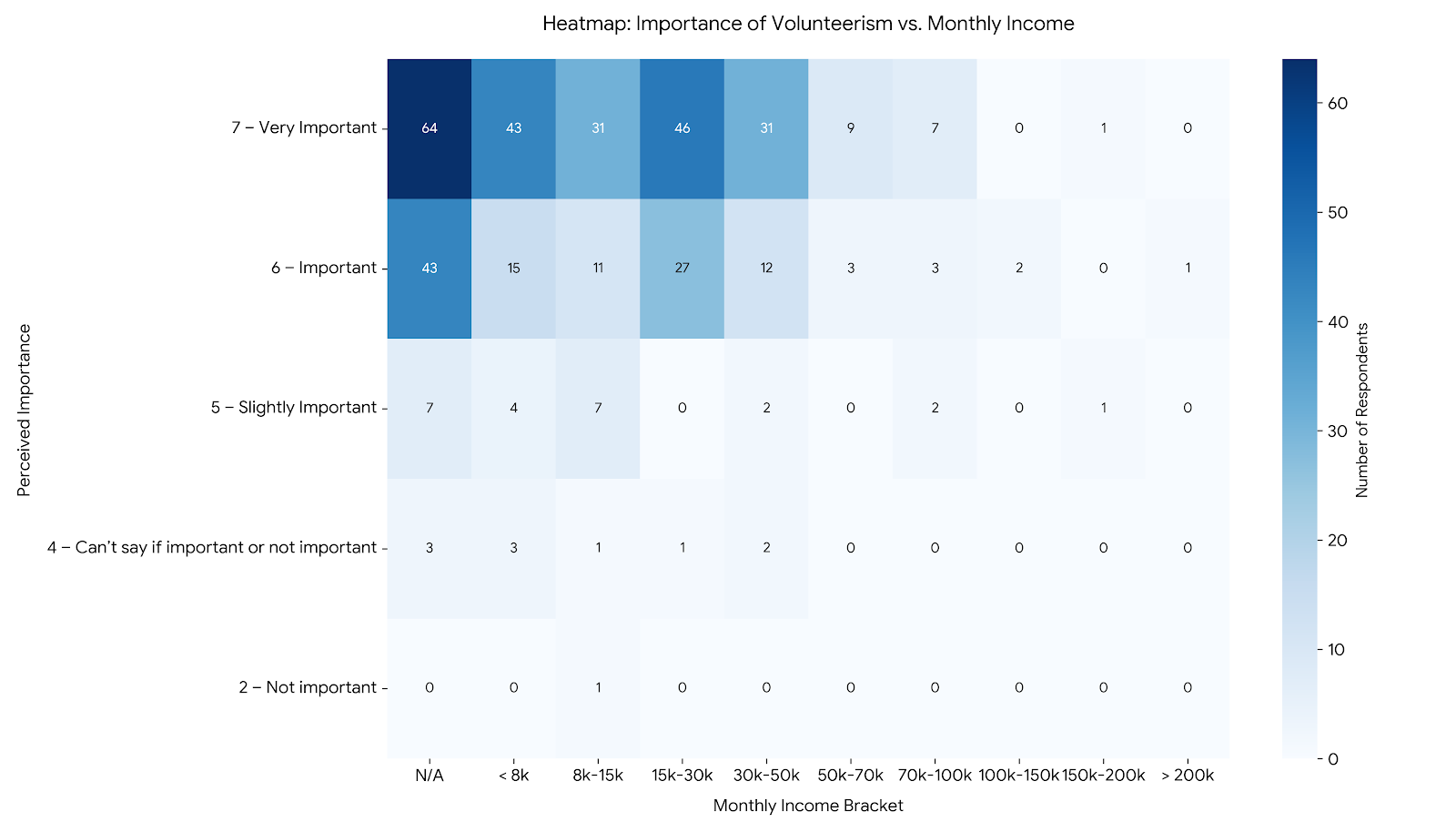
The economic profile of respondents reveals a powerful narrative of grassroots generosity. A significant 44.4% reported their income as “Not Applicable,” a figure that aligns with the high volume of student participants. However, among those with an active income, the largest segment falls within the lower-to-middle income bracket, with 27.6% earning below ₱30,000 monthly.
This strong participation from those with modest incomes reinforces the findings of the Charities Aid Foundation’s World Giving Index[2], which suggests that individuals in developing nations and those with fewer resources often demonstrate greater proportional generosity in time and aid. In the Philippine context, this indicates that volunteerism is not a “luxury” reserved for the wealthy, but a deeply embedded community practice. This is further evidenced by the “Importance Score,” where respondents in the ₱15,000 to ₱30,000 income range rated the value of volunteering at a high 6.5 out of 7.0, matching or even exceeding the scores of higher-income earners.
| Monthly Income Range | Total Demographics | Volunteer Respondents | Volunteer Percentage | Participation Rate |
| Below P8,000 | 65 | 50 | 17.92% | 76.92% |
| P8,000 to P15,000 | 51 | 36 | 12.90% | 70.59% |
| P15,001 to P30,000 | 74 | 53 | 19.00% | 71.62% |
| P30,001 to P50,000 | 47 | 35 | 12.54% | 74.47% |
| P50,001 to P70,000 | 12 | 10 | 3.58% | 83.33% |
| P70,001 to P100,000 | 12 | 8 | 2.87% | 66.67% |
| P100,001 to P150,000 | 2 | 2 | 0.72% | 100.00% |
| P150,001 to P200,000 | 2 | 2 | 0.72% | 100.00% |
| More than P200,000 | 1 | 1 | 0.36% | 100.00% |
| Not applicable | 117 | 82 | 29.39% | 70.09% |
VOLUNTEER EXPERIENCE
Volunteer Age
Based on the survey data, the length of volunteering experience, referred to as “volunteer age” (v-age), is distributed across various stages of involvement. The largest segment of the population consists of those having 1 to 4 years of experience with 122 respondents. This is followed by 97 veteran volunteers who have been active for more than 10 years. Mid-level volunteers with 5 to 9 years of service account for 74 respondents, while those in the Entry Stage include 43 individuals with 0 to 5 months of experience and 24 individuals with 6 to 11 months of experience. Finally, a group of 23 respondents reported having no prior volunteering experience.
| Length of Volunteering | Responses | Percentage |
| 1–4 years | 122 | 31.85% |
| 10 years and above | 97 | 25.33% |
| 5–9 years | 74 | 19.32% |
| 0–11 months | 67 | 17.49% |
| No prior experience | 23 | 6.01% |
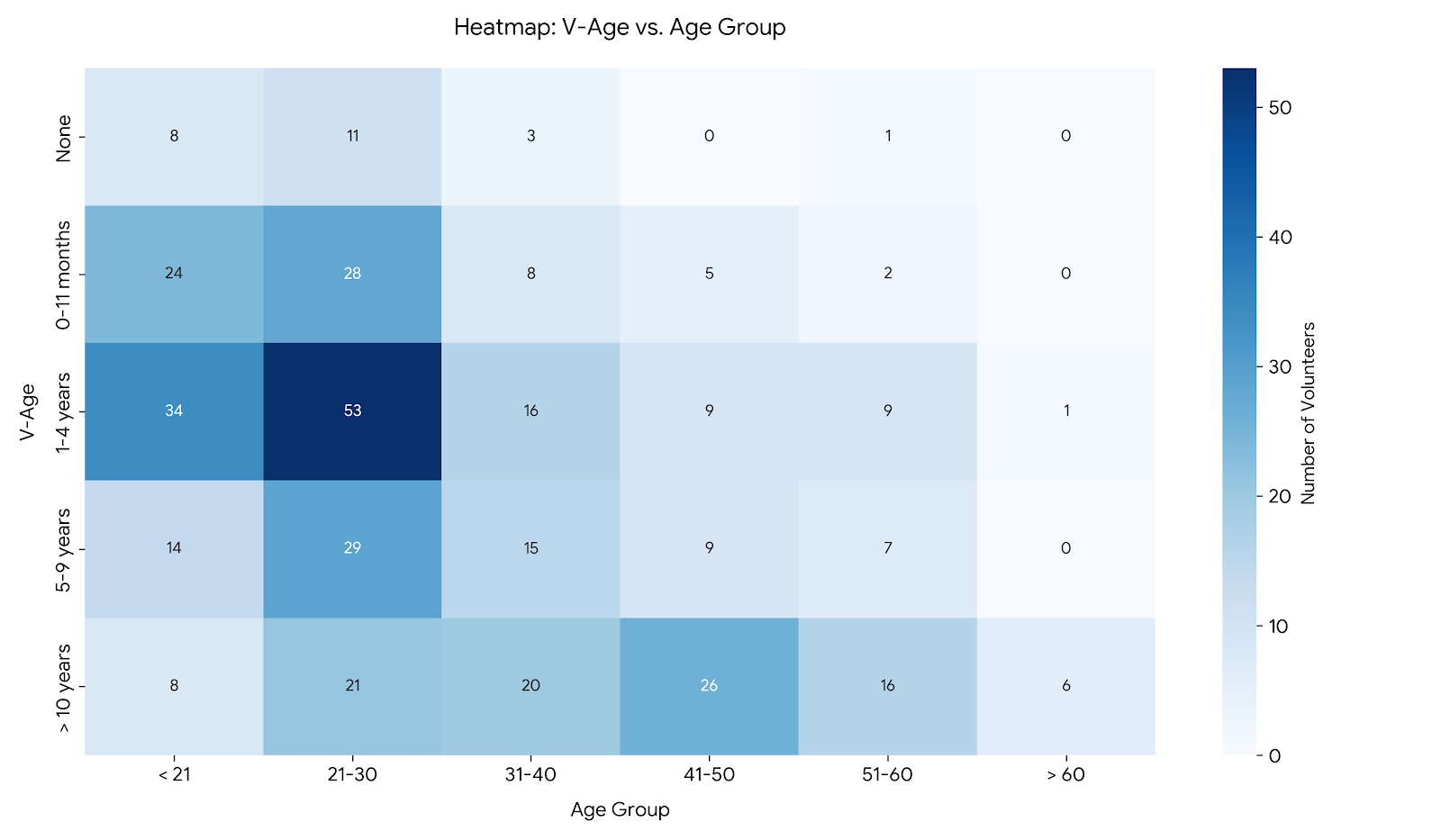
Combining v-age and age illustrates a clear transition from exploratory service to lifelong commitment as volunteers mature. Among the youth (under 21), volunteering is often a relatively recent pursuit, with 38.6% having been active for 1 to 4 years. However, a significant 25.0% of these young responders have already been volunteering for 5 years or more, suggesting many start their journey in early childhood. This momentum carries into the 21–30 age bracket, which serves as a critical transition point; while many are still finding their footing, this group contains the highest raw volume of “young veterans,” with 21 individuals already boasting over a decade of service. As Filipinos progress into middle age and beyond, volunteering becomes deeply ingrained in their personal history; over half (53.1%) of those aged 41–50 and a dominant 85.7% of seniors over 60 have been active for more than ten years. This longitudinal shift suggests that while the entry points vary, those who remain in the ecosystem tend to make volunteerism a permanent fixture of their lives.
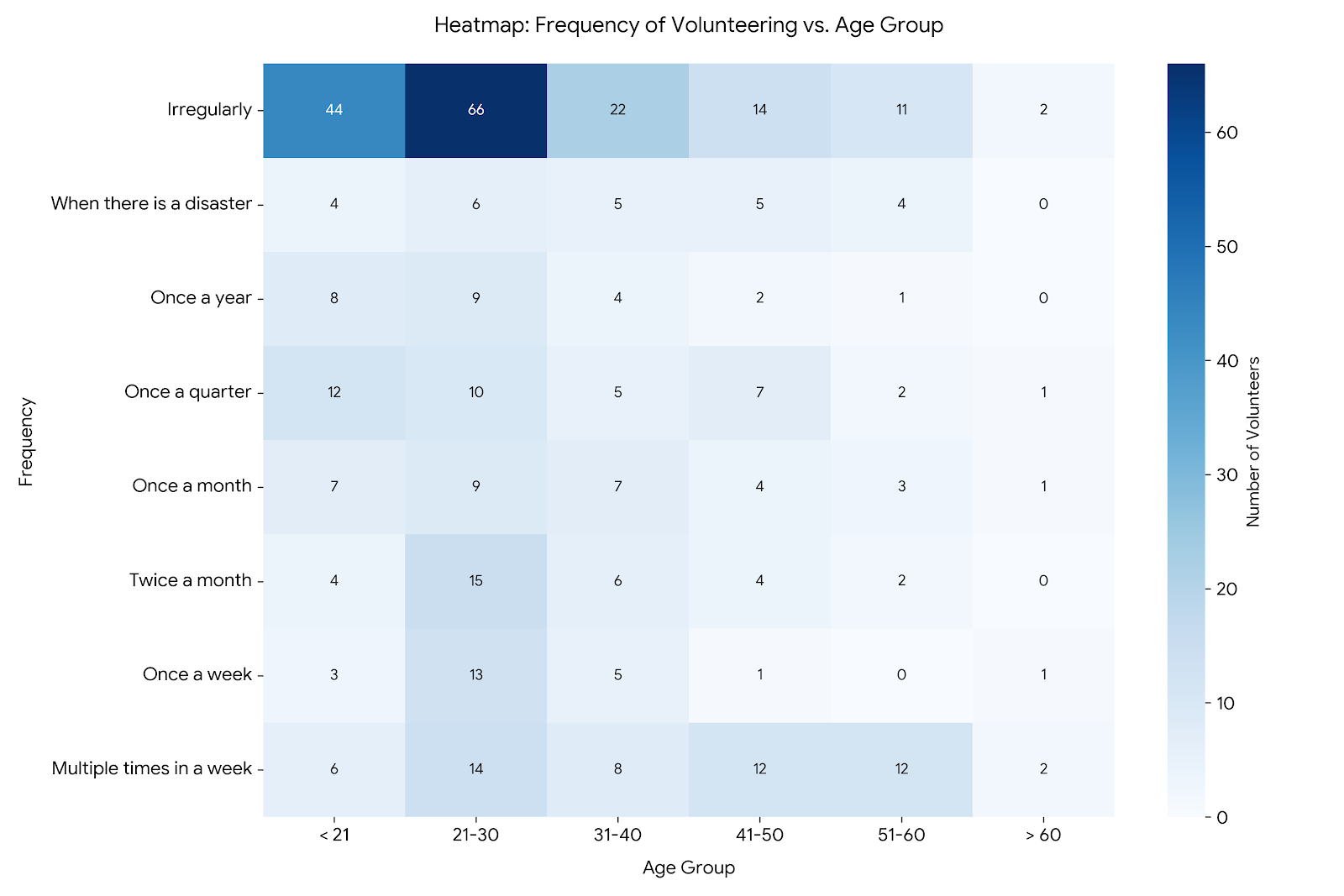
Frequency of Volunteering
In terms of frequency, the majority of respondents (159) volunteer irregularly, suggesting that many prioritize flexibility or are still navigating how to integrate service into their personal and professional routines. In contrast, 54 respondents volunteer multiple times a week, demonstrating a deep level of commitment and a strong, high-intensity alignment with their chosen advocacies.
| Frequency of Volunteering | Responses | Percentage |
| Irregularly | 159 | 41.51% |
| Multiple times in a week | 54 | 14.10% |
| Once a quarter | 37 | 9.66% |
| Once a month | 31 | 8.09% |
| Twice a month | 31 | 8.09% |
| Once a year | 24 | 6.27% |
| When there is a disaster | 24 | 6.27% |
| Once a week | 23 | 6.01% |
The frequency of volunteering follows a distinctive evolution as volunteers age, transitioning from episodic participation to deeply integrated habits. Youth volunteers (<21) primarily follow an episodic “burst” model; while 6.8% serve multiple times a week, a dominant 50.0% volunteer irregularly, likely balancing service with academic demands. As volunteers enter the 21–30 and 31–40 brackets, their rhythm diversifies into more structured commitments, with a notable rise in monthly and weekly engagement. A significant pivot occurs in later maturity (41–60 years old); while approximately 30% of this group maintains an irregular or project-based model, those who remain regular exhibit a highly proactive habit, with over 34% engaging multiple times a week. This progression highlights a shift from the reactive, high-energy participation of youth to a more intentional and consistent model of service in later life, where volunteering is fully integrated into a dedicated weekly routine.
Type of Volunteer Activities
The table below shows the breakdown of the volunteer activities for the past 12 months among the respondents who are currently volunteering. For the Filipino volunteers, “presence is the primary gift.” An overwhelming 81.2% of active volunteers choose to contribute their time, signaling a deep-seated preference for direct, hands-on involvement over passive support. In stark contrast, only 10.3% of respondents reported donating money as their primary mode of service. This suggests that while financial support is a necessary component of the NGO ecosystem, the local culture of Bayanihan is built on personal effort and physical presence.
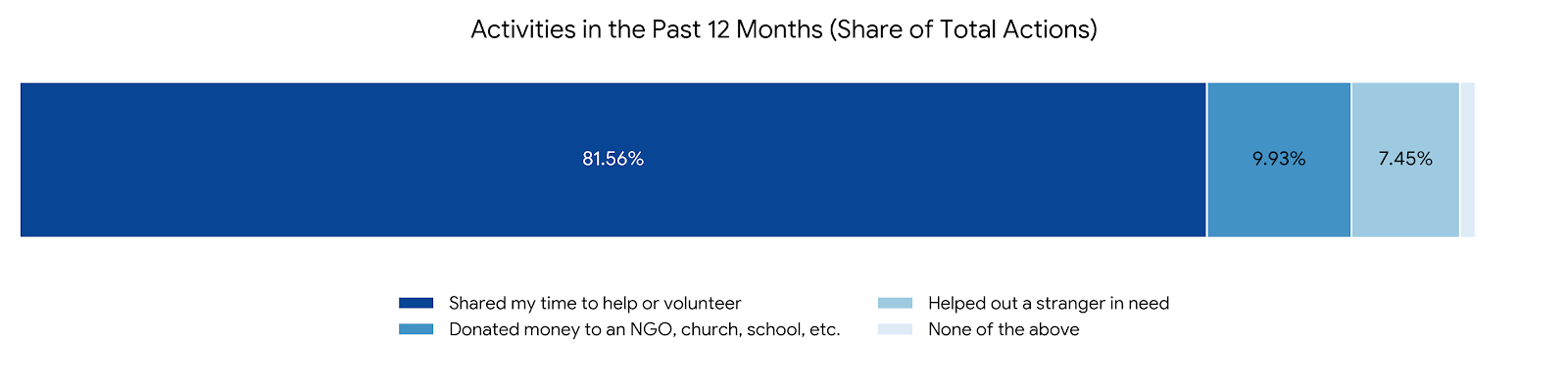
| Activities in the Past 12 Months | Responses | Percentage |
| Shared my time to help or volunteer | 230 | 56.65% |
| Donated money to an NGO, church, school, etc. | 28 | 6.90% |
| Helped out a stranger in need | 21 | 5.17% |
| None of the above | 3 | 0.74% |
PERCEPTIONS OF VOLUNTEERING
To further understand these engagement levels, respondents were asked to rate their agreement with several statements regarding their volunteer experience using a scale of 1 (Strongly Disagree) to 7 (Strongly Agree).
| Statement of Experience | Rating Average (out of 7) |
| I volunteer only when I have free time or nothing to do | 6.11 |
| Volunteering has become an integral part of my life | 5.84 |
| I have clarity and certainty on the advocacies I support | 5.77 |
| I look for a volunteer group that has a sustainable long-term goal | 5.75 |
| I am particular about the support given by volunteer groups to volunteers | 5.65 |
| I prefer to volunteer in different organizations and advocacies | 5.58 |
| I would like to leave a legacy to the community | 5.52 |
| I easily give up volunteering when I become busy with other priorities | 5.44 |
| I want to develop other leaders as well | 5.43 |
| It doesn’t matter what the advocacy is as long as I get to volunteer | 5.35 |
| I have developed additional skills during volunteering | 4.58 |
| I feel a void when I am not able to volunteer | 4.56 |
| I don’t see myself stopping from my volunteer work | 4.18 |
| Volunteering can be done any day through little acts | 3.87 |
The survey data provides a nuanced look at how Filipinos perceive their commitment to service. While the moral value of volunteerism is undisputed, there is a clear distinction between valuing the act and integrating it into a daily routine.
The “Residual” Nature of Service is evidenced by the highest-rated statement in this category: “I volunteer only when I have free time or nothing to do” (6.11/7.0). This reveals that for the majority of respondents, volunteering is treated as a secondary or “residual” activity. Rather than being a non-negotiable fixture in their schedules, service is dependent on the availability of surplus time. This explains the high volume of irregular volunteers (87), as participation is often dictated by the flow of personal, academic or professional demands rather than a fixed commitment.
Furthermore, an Institutional Barrier exists, as seen in the lowest-rated statement: “Volunteering can be done any day through little acts.” This suggests a narrow, formalistic view of service where many respondents do not yet see “everyday acts of kindness” or small-scale community help as “true” volunteerism. Instead, the perception remains that service must be event-driven (tied to a specific outreach or disaster relief effort) or organization-dependent (requiring a formal invitation or a structured program) to be considered valid.
Volunteering Challenges
According to the survey, the challenges faced by Filipino volunteers are primarily structural, often stemming from a lack of integrated support systems. The most significant deterrents to consistent service are centered on three practical constraints. Scheduling conflicts emerged as the top barrier, cited by 233 respondents (57.4%), followed closely by financial challenges (212 responses or 52.2%) and logistical hurdles such as transportation (197 responses or 48.5%). These figures suggest that many volunteers struggle to balance their commitments with the demands of service, especially when external resources or support systems are lacking to offset out-of-pocket costs.
| Challenges | Responses | Percentage |
| Schedule | 233 | 57.39% |
| Financial challenges | 212 | 52.22% |
| Logistics (transportation, etc.) | 197 | 48.52% |
| Poor communication about roles and responsibilities | 128 | 31.53% |
| Lack of support and guidance | 109 | 26.85% |
| Poor communication about expectations and goals | 101 | 24.88% |
| Mismatch of expectations | 82 | 20.20% |
| Lack of impact (not seeing/feeling results) | 75 | 18.47% |
| Stress or burnout from volunteer work | 73 | 17.98% |
| Lack of recognition | 53 | 13.05% |
| Getting along with other volunteers | 48 | 11.82% |
| No or minimal opportunities for growth and learning | 44 | 10.84% |
While the data shows that only 6.8% of the respondents consider themselves as “donors”, they also highlight a unique “hidden” financial contribution through self-funding their service. 14.5% of young professionals (aged 21–30) and nearly 20% of senior volunteers (aged 51–60) cited financial challenges, such as transportation and meal costs, as a major hurdle. This implies that the Philippine volunteer experience is characterized by a “sacrificial” model, where individuals are willing to spend their own limited resources to ensure their personal presence in the community.
Organizational communication also emerged as a significant concern that impacts the quality of the volunteer experience. Poor communication regarding roles and responsibilities (128 or 31.5%) and broader expectations and goals (101 or 24.9%) were commonly cited, indicating that volunteers often feel unclear about their specific contributions. This lack of clarity frequently results in mismatched expectations (82 or 20.2%) and a diminished sense of perceived impact (75 or 18.5%), both of which can lead to a decline in long-term motivation and engagement.
Emotional and interpersonal challenges play a notable role in the volunteer lifecycle. Issues such as stress or burnout (73 or 18.0%), a lack of recognition (53 or 13.1%), and difficulty navigating relationships with other volunteers (48 or 11.8%) contribute to the overall experience. These findings highlight a critical need for organizations to look beyond structural logistics and focus on fostering a supportive environment that prioritizes clear communication and volunteer well-being.
Barriers also vary based on life stage and age. For students and young professionals under 30, a “time crunch” is the primary barrier, with roughly 16% citing rigid schedules as their greatest challenge, followed closely by logistical and transportation issues (11.6%). However, for older volunteers aged 51–60, the struggle shifts from time to resources, as financial challenges become the dominant obstacle at 19.7%. While the youth are often “time-poor” but mobile, older volunteers are “time-rich” but restricted by out-of-pocket costs. This indicates that the volunteer experience in the Philippines could be vastly improved by tailoring support—such as offering schedule flexibility for the young and logistical subsidies for the elderly.
Importance
In total, over 90% of respondents rated volunteering as either “Important” (6) or “Very Important” (7) on the scale. These results reveal a deep-seated belief in the collective power to create an impactful and beneficial difference in the community, demonstrating a robust cultural and personal affinity for volunteerism among Filipinos. Conversely, for the small minority who responded “Not Important” (2) or “Neutral/Can’t Say” (4), the data shows they are predominantly individuals who are currently not volunteering or have only been active for less than five months. This suggests that the perceived value of service grows significantly once an individual moves past the initial entry stage.
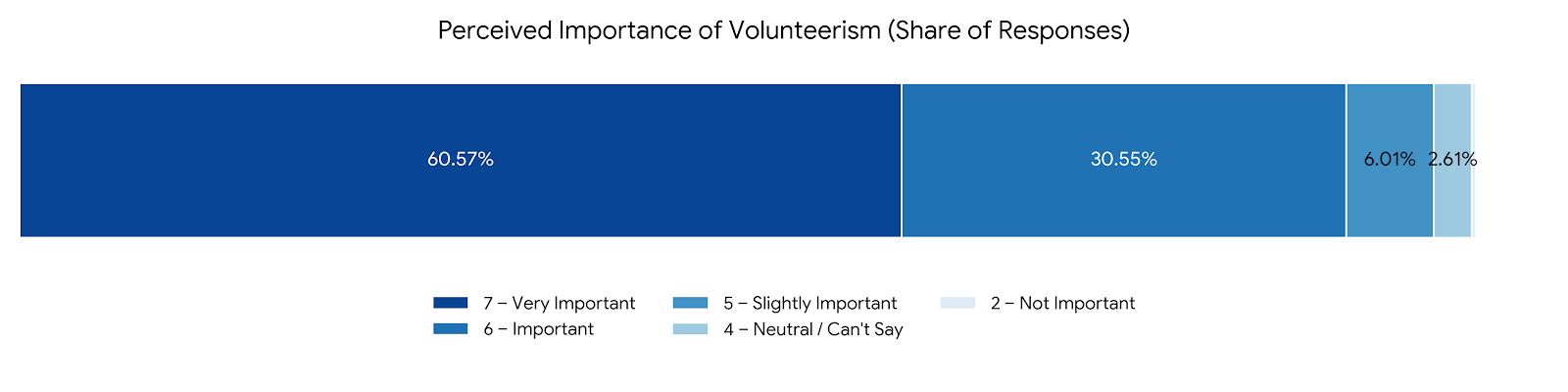
| Perceived Importance of Volunteerism | Responses | Percentage(out of 406) |
| 7 – Very Important | 232 | 60.57% |
| 6 – Important | 117 | 30.55% |
| 5 – Slightly Important | 23 | 6.01% |
| 4 – Neutral / Can’t Say | 10 | 2.61% |
| 3 – Slightly Not Important | 0 | 0.00% |
| 2 – Not Important | 1 | 0.26% |
| 1 – Not Important at All | 0 | 0.00% |
The perceived importance of volunteering increases steadily with age. Older respondents (41+ years old) view volunteering as significantly more vital than those under 21. Groups with potentially more life experience or different time flexibility, such as retirees, the unemployed, and those unable to work, rated volunteering higher than students.
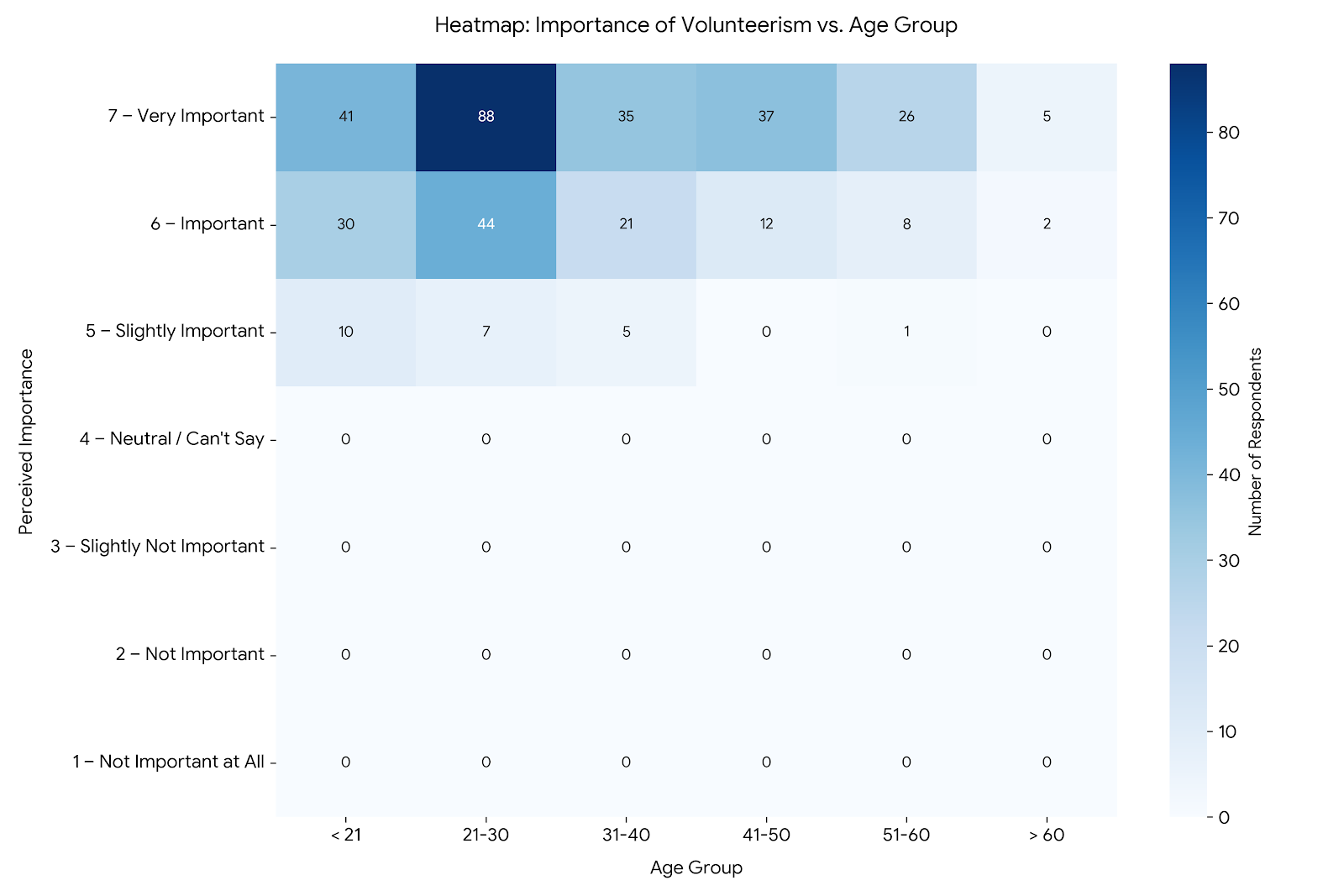
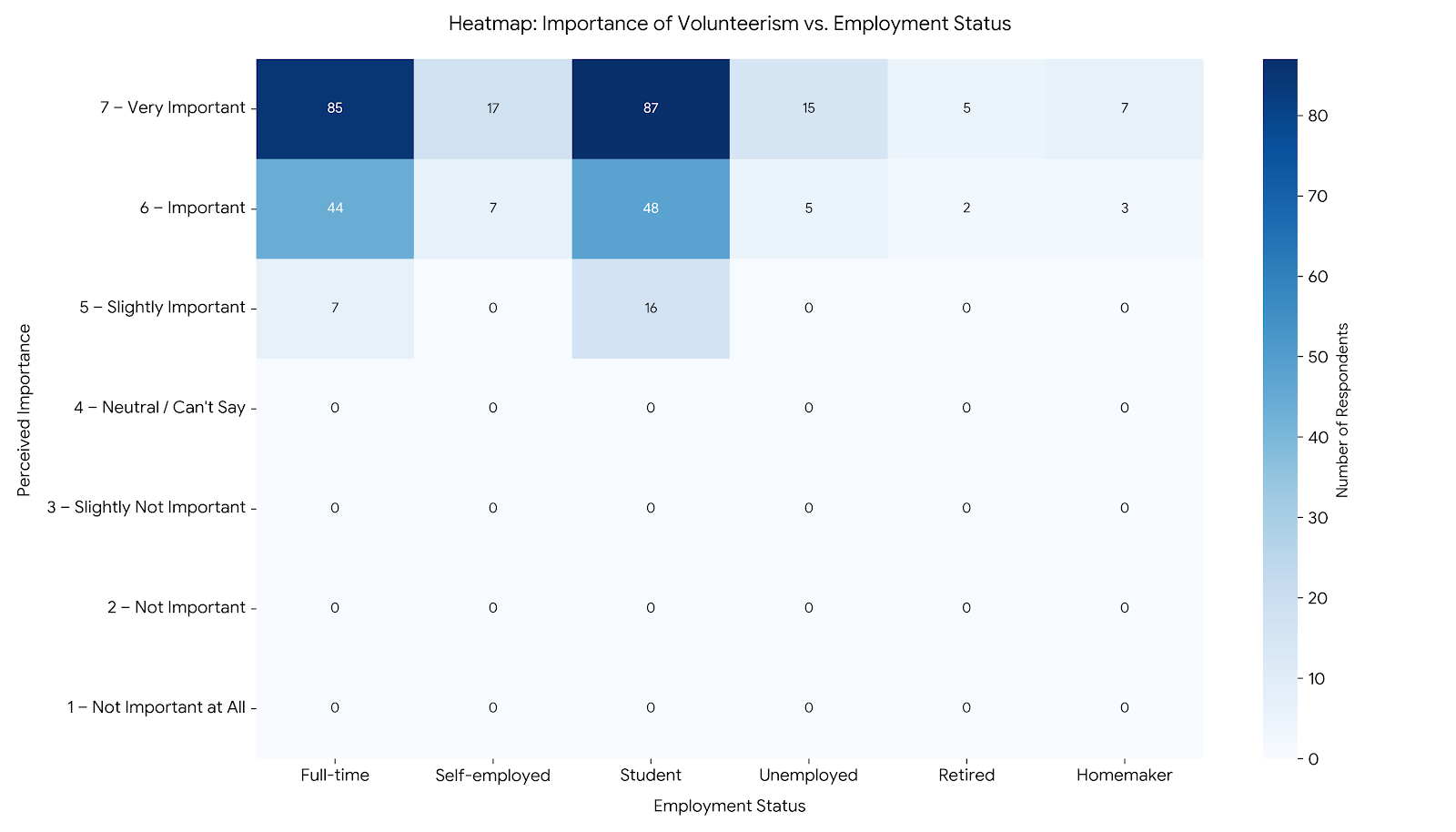
Middle-income earners (₱50,000–₱70,000) expressed the highest commitment to the importance of volunteering, whereas students (classified as “Income: Not Applicable”) showed lower relative scores. There is also a high and consistent level of importance felt by those with Bachelor’s and Post-Graduate degrees, while those currently in Senior High School are still developing this sense of importance.
Despite the high importance rate of 6.5 out of 7.0, the struggle to make volunteering a habit remains evident. The statement, “Volunteering can be done any day through little acts,” received an agreement rate of only 3.87, the lowest in the study. This suggests that the primary barrier to more frequent service is not a lack of passion or belief in the cause, but rather a challenge of integration. While Filipinos deeply value the impact of their work, they primarily engage through traditional, structured channels that are often difficult to sustain amidst the pressures of daily life.
| Perceived Importance of Volunteerism | Responses | Percentage |
| It changes lives and makes a difference to the communities | 325 | 80.05% |
| It encourages social responsibility | 311 | 76.60% |
| It builds and strengthens community engagement | 309 | 76.11% |
| It provides a venue for people to make a contribution to society | 291 | 71.67% |
| It fosters sustainable changes (for communities, environment, etc.) | 289 | 71.18% |
| It aids in the development of the person/ volunteer | 289 | 71.18% |
| It provides well-being for the person/ volunteer | 276 | 67.98% |
| It promotes equality in society | 220 | 54.19% |
The survey reveals that the primary driver for Filipino volunteers is a desire for social impact, with 325 respondents (80.0%) selecting “it changes lives and makes a difference to the communities” as their top reason. This is followed closely by the belief that volunteering “encourages social responsibility” (311 or 76.6%) and “strengthens community engagement” (309 or 76.1%). These outward-focused motivations reflect a deep commitment to civic duty, rooted in a collective sense of Bayanihan. Interestingly, demographic data shows that this community-first mindset is most pronounced among Postgraduates, who gave the importance of service a near-perfect score of 6.7/7.0, and Full-time Employees, who view workplaces as vital platforms for this civic engagement.
Beyond community-shaping, inward-focused factors such as individual growth also play a significant role. Among the participants, 289 (71.2%) believe volunteering “aids in the development of the volunteer,” while 276 (68.0%) find that “it provides well-being for the individual.” This suggests that while Filipinos value personal enrichment and empowerment, these benefits are secondary to the primary goal of service. A notable demographic trend appears among students and those in their early v-age (1–4 years); these groups are more likely than veterans to prioritize “learning new skills” as a key benefit, highlighting that younger volunteers view service as a dual-purpose tool for both social good and professional growth.
Despite these personal benefits, the disparity between outward-focused and inward-focused responses indicates that volunteerism in the Philippines is still primarily framed as a tool for societal change rather than a self-care or development practice. However, the data among Lower-income groups (earning below ₱30,000) proves that even when personal resources are limited, the drive for community impact remains the dominant motivator. Bridging this gap requires a shift in narrative – recognizing that the volunteer ecosystem thrives most when it is seen as a reciprocal relationship that nurtures both the resilience of the community and the well-being of the individual.
Benefits
When examining the specific benefits of volunteering, the data reveals a compelling shift toward the internal life of the volunteer. The most frequently selected benefit was that volunteering “gives people a sense of purpose,” chosen by 141 respondents (34.7%). This finding highlights a fascinating nuance: while volunteers initially view the importance of volunteering through an outward, societal lens, they perceive the primary benefit as a deeply personal one. For many Filipinos, volunteering is not merely a “good deed” performed for others, but a vital source of direction, identity, and personal fulfillment.
| Perceived Benefits of Volunteering | Responses | Percentage |
| It gives people a sense of purpose | 141 | 34.73% |
| It introduces long-term changes for the betterment of society/environment | 124 | 30.54% |
| It provides a sense of community by connecting people | 123 | 30.30% |
| It enables people to help others in a selfless way | 119 | 29.31% |
| It allows people to share their time, skills, resources | 101 | 24.88% |
| It addresses the unmet or unfulfilled needs of the communities | 95 | 23.40% |
| It provides better access to education, healthcare, housing | 83 | 20.44% |
| It improves social and relationship skills | 77 | 18.97% |
| It provides self-fulfillment | 67 | 16.50% |
| It fills the gaps or supplements the government | 67 | 16.50% |
| It improves self-esteem and confidence | 45 | 11.08% |
| It serves as an outlet (relieve stress, etc.) | 30 | 7.39% |
| It teaches or improves professional skills | 28 | 6.90% |
| It brings fun and enjoyment | 22 | 5.42% |
| It helps in making new friends | 21 | 5.17% |
| It provides job prospects | 5 | 1.23% |
This inward sense of purpose is closely followed by the desire for broader influence, with 124 respondents (30.5%) citing “long-term positive change in society and the environment” and 123 respondents (30.3%) valuing the “sense of community” it fosters. This indicates that the Filipino volunteer experience is a dual-layered pursuit; they seek to be part of something larger than themselves, wanting to belong to a network of like-minded individuals while simultaneously anchoring their own lives in a meaningful cause.
The study also reveals a distinct generational evolution, where the perceived benefits of service shift as individuals move through different life stages:
- The Idealistic Youth (Under 21): For students and younger volunteers, service is primarily a vehicle for systemic change. Roughly 15.5% of those under 21 and 14.4% of student respondents cite long-term societal and environmental impact as the primary benefit of their work.
- The Purpose-Seeking Professional (Age 31–40): As individuals transition into the professional world, the perceived benefit shifts toward internal stability. The search for personal meaning and community connection becomes the top driver for 15.6% of this age group.
- The Legacy-Driven Veteran (Age 41–60+): In middle age and retirement, the focus matures into stewardship. The primary drivers become the selfless sharing of accumulated skills – valued by 14.3% of those aged 41–50 – and the desire for continued social integration, a priority for 14.3% of retirees.
Despite these shifting motivations, the perceived importance of volunteering remains remarkably consistent across all demographic boundaries. This commitment transcends income level and educational attainment, with the sense of importance (on a 7-point scale) actually strengthening from 6.19 among the youth to 6.76 as volunteers reach their 40s. Furthermore, the data shows no significant gender gap, with women (6.49) and men (6.46) sharing nearly identical perceptions of its value. This highlights that volunteerism is a shared cultural pillar; while the specific “why” may transition from the idealism of youth to the legacy-building of the senior years, the underlying value of Bayanihan remains a constant, unifying force in Philippine society.
Reasons for Volunteering
The primary driver for Filipino volunteers is the desire to contribute personal expertise, with “I want to share my skills and resources” emerging as the top reason selected by 155 respondents (38.2%). This suggests that for many, volunteering is a purposeful act of stewardship rather than a passive activity. This is followed by a desire for variety and exploration, with 120 respondents (29.6%) wanting to “experience different outreach activities,” while 101 respondents (24.9%) are motivated by a desire to “find out more about different advocacies” or a patriotic urge to “help our country.” Interestingly, inward-focused reasons like “self-fulfillment” (93 or 22.9%) and “building professional credentials” (23 or 5.7%) rank lower than the commitment to service as a “way of life” (86 or 21.2%), reinforcing the idea that the Filipino volunteer spirit is deeply rooted in altruism rather than external rewards like recognition (6 or 1.5%).
| Reasons for Volunteering | Responses | Percentage |
| I want to share my skills and resources | 155 | 38.18% |
| I want to experience different outreach activities. | 120 | 29.56% |
| I want to find out more about different advocacies. | 101 | 24.88% |
| I want to help our country. | 101 | 24.88% |
| I have a particular advocacy I want to support. | 93 | 22.91% |
| I volunteer for self-fulfillment. | 93 | 22.91% |
| I have the responsibility to help | 87 | 21.43% |
| Volunteering is my way of life. | 86 | 21.18% |
| I want to learn/improve a new skill(s). | 73 | 17.98% |
| I want to meet new people. | 47 | 11.58% |
| I want to work in the social development sector. | 45 | 11.08% |
| I want to help the disaster victims. | 33 | 8.13% |
| I have spare time. | 26 | 6.40% |
| I want to build my professional credentials/resume. | 23 | 5.67% |
| I support my family, partner, or friends in volunteering. | 19 | 4.68% |
| To follow the teachings of my religion | 15 | 3.69% |
| It is mandatory in school or in the office. | 10 | 2.46% |
| I volunteer to get other rewards (certificates, etc.) | 8 | 1.97% |
| I want to be recognized. | 6 | 1.48% |
The reasons vary also based on age. For youth and students (under 21), the motivation is exploratory, with 15.1% focusing on discovering advocacies and learning new skills. However, as volunteers mature into professionals and seniors (age 41–60+), the motivation shifts significantly toward the top-rated answer of sharing expertise; for those aged 41–50, sharing accumulated skills and resources is valued by 14.3% of the cohort as they transition from “learning” to “giving.” While postgraduates and full-time employees show the highest rating for the importance of service (6.7/7.0), the data consistently shows that across all income levels, the desire to help the country and share resources outweighs mandatory requirements, with only 10 respondents (2.5%) citing school or office mandates as their reason for serving.
The survey reveals that v-age significantly impacts the motivations behind service, illustrating a clear evolution from initial discovery to a deeply held identity. Those with 1 to 4 years of experience represent a significant portion of the sample with 98 respondents and are primarily in a phase of discovery. Their motivations center on finding out more about different advocacies and experiencing varied outreach activities as they gain experience through formal organizations and narrow down the causes that truly resonate with them.
In contrast, volunteers with 10 or more years of experience, a veteran cohort of 83 respondents, highlight a transition where volunteering moves from being an activity to a core identity. While some long-term volunteers eventually pivot toward financial donations, the majority cite the belief that “Volunteering is my way of life” as their primary driver. For this group, a decade or more of service signifies that volunteerism has become a permanent, integral part of their lifestyle and self-image.
Meanwhile, those with 0 to 5 months of experience, consisting of 18 respondents, tend to have motivations that are more transactional or event-based, such as wanting to learn a new skill or helping disaster victims. While these individuals are aware of social needs, they are often still searching for the right long-term fit to deepen their involvement.
A comparison of motivations reveals a clear evolution in why Filipinos volunteer: while the 2015 study[1] showed that engagement was primarily driven by general curiosity (36%) and academic influence (13.9%), the 2024 data indicates that awareness is now heavily linked to digital presence and professional networks. Today, high-income earners and full-time employees represent the most aware segments, signaling a shift where the “hook” for volunteering has transitioned from a school-based requirement to a deliberate lifestyle choice. Modern volunteers are increasingly driven by a search for self-fulfillment and a desire for sustainable community change, reflecting a more mature and professionalized volunteer landscape than a decade ago.
VOLUNTEER ORGANIZATIONS’ INSTITUTIONAL REPUTATION
The survey further assessed the institutional reputation of various volunteer organizations within the Philippines. These entities were evaluated in terms of public awareness, active engagement, and volunteer experience ratings.
When respondents were asked to name the first organization that came to mind without any prompts, the Philippine Red Cross was the leader, appearing in 10.59% of top-of-mind responses. iVolunteer Philippines secured the second spot with 8.13% of first mentions, establishing itself as a primary gateway for service. Other notable spontaneous mentions included the Angat Buhay Foundation (5.17%), UNICEF (2.96%), and PAWS (2.46%), showcasing a mix of international prestige, high-profile civic engagement, and specialized advocacies.
| Name of Organization | Number of Mentions | Percentage (out of 406) |
| Philippine Red Cross | 43 | 10.59% |
| iVolunteer Philippines | 33 | 8.13% |
| Angat Buhay Foundation | 21 | 5.17% |
| UNICEF | 12 | 2.96% |
| Philippine Animal Welfare Society (PAWS) | 10 | 2.46% |
| Gawad Kalinga | 10 | 2.46% |
| Island Rescue Organization | 5 | 1.23% |
| Rotary / Rotaract | 4 | 0.99% |
| Project Pearls | 4 | 0.99% |
| Kythe Foundation | 3 | 0.74% |
| Save the Children | 3 | 0.74% |
| 2KK (Tulong sa Kapwa Kapatid) | 3 | 0.74% |
When respondents were asked to list additional organizations beyond their first mention, the Philippine Red Cross reinforced its dominant position, appearing in 14.29% of extended responses. This stage of recall saw a significant rise for advocacy-specific organizations, most notably PAWS, which climbed to 7.64%, and Gawad Kalinga at 5.67%, suggesting these institutions have high “secondary” recall as category leaders in animal welfare and community development. iVolunteer Philippines (6.40%) and Angat Buhay Foundation (5.91%) maintained steady presence, while traditional civic clubs like Rotary/Rotaract (3.45%), JCI (1.72%), and Lions Club (1.23%) emerged more clearly in this broader search. Overall, while the “Big Three” continue to lead, the secondary responses reveal a deeper layer of awareness for specialized local NGOs and established international humanitarian groups like UNICEF and Caritas.
| Name of Organization | Number of Mentions | Percentage (out of 406) |
| Philippine Red Cross | 58 | 14.29% |
| Philippine Animal Welfare Society (PAWS) | 31 | 7.64% |
| iVolunteer Philippines | 26 | 6.40% |
| Angat Buhay Foundation | 24 | 5.91% |
| Gawad Kalinga | 23 | 5.67% |
| Rotary / Rotaract | 14 | 3.45% |
| Project Pearls | 10 | 2.46% |
| JCI | 7 | 1.72% |
| Caritas | 7 | 1.72% |
| Kythe Foundation | 5 | 1.23% |
| UNICEF | 5 | 1.23% |
| Lions Club | 5 | 1.23% |
When presented with a predefined list, institutional reputation reached significantly higher levels, identifying the organizations with the strongest “household name” status in the Philippines. The Philippine Red Cross holds near-universal recognition at 85.2% (346 mentions), while the Philippine Animal Welfare Society (PAWS) follows as a strong second at 63.8% (259 mentions), indicating high public engagement with animal advocacy. Other notable organizations include Gawad Kalinga (60.8% or 247 mentions), iVolunteer Philippines (56.9% or 231 mentions), and the Angat Buhay Foundation (53.4% or 217 mentions). Among service clubs, Rotary/Rotaract leads the category with 44.6% (181 mentions). While legacy institutions maintain the widest reach, the fact that platform-based and cause-specific groups like iVolunteer and PAWS have captured over 55% of the market signals a clear shift toward more specialized forms of volunteerism.
| Aided Awareness | Number of Mentions | Percentage (out of 406) |
| Red Cross | 346 | 85.22% |
| Philippine Animal Welfare Society (PAWS) | 259 | 63.79% |
| Gawad Kalinga | 247 | 60.84% |
| iVolunteer Philippines | 231 | 56.90% |
| Angat Buhay Foundation | 217 | 53.45% |
| Rotary / Rotaract | 181 | 44.58% |
| CARITAS | 152 | 37.44% |
| Philippine Eagle Foundation | 140 | 34.48% |
| Habitat for Humanity | 126 | 31.03% |
| Haribon Foundation | 117 | 28.82% |
Regarding the quality of engagements with these NGOs, the data shows a strongly positive trend in how volunteers perceive their recent experiences. This commitment is reflected in the quality of engagement, as over 74% of active participants rated their recent experiences as “Very Good” or “Excellent.” This high morale is primarily driven by a strong sense of community impact, effective organizational execution, and clear communication. Leading the way in volunteer satisfaction are organizations such as iVolunteer Philippines, Philippine Red Cross, and Project Pearls, which have successfully fostered environments where volunteers feel their skills are valued and their contributions make a tangible difference.
Conversely, while only a small fraction of the sample reported negative sentiment, the data provides insight into the friction points of service. Ratings of “Good” (52) and “Fair” (19) suggest that some volunteers encountered satisfactory but unexceptional experiences, often due to minor logistical hurdles or a lack of clear feedback. The very few who rated their experience as “Poor” or “Very Poor” (5 respondents) likely faced more significant hurdles, such as poor organizational management, mismatched expectations, or a lack of recognition. These findings suggest that while most Filipino NGOs are delivering fulfilling experiences, there is a recurring need to move beyond “event-driven” logistics toward a model that prioritizes the volunteer’s personal growth and long-term connection to the cause.
IVOLUNTEER’S CONTRIBUTION TO THE VOLUNTEER SECTOR
iVolunteer Philippines is widely perceived as a transformative platform that successfully lowers the barrier to entry for aspiring volunteers, earning an “Excellent” rating from the vast majority of its active users. Its primary value lies in its role as a trusted curator of diverse advocacies, bridging the gap between volunteers and legitimate organizations through a seamless digital ecosystem. Among those who engaged with the platform in the past 12 months, satisfaction remains exceptional, with 89% rating their overall experience as “Very Good” or “Excellent”; notably, 64% (18 out of 28 direct users) gave the platform a perfect 7/7 score. This high institutional reputation is supported by a strong digital reach, as 168 respondents follow the platform for social media updates and 157 actively sign up for events via the iVolunteer website. Beyond digital transactions, educational initiatives like the “Start Your Adventure” seminars have reached 64 participants, representing approximately 11% of the total sample.
iVolunteer Philippines also exhibits its strongest brand presence among young professionals and female respondents. Awareness peaks at 79% for those aged 31–40 and 73.2% for those aged 21–30, while maintaining a significant gender lead with 65.9% of women recognizing the organization compared to 51% of men. The platform’s reach is heavily tied to economic and professional status, with awareness hitting 75% among mid-to-high income earners (P50,000–P100,000) and 68.6% among full-time employees. Geographically, while NCR and Region 3 (CARAGA) show solid awareness around 54%, the organization has a particularly dominant presence in Region 11 (Davao) with 100% awareness among respondents there. Conversely, lower awareness levels among students, retirees, and lower-income segments suggest that while iVolunteer is a household name for the established workforce, there is significant potential for growth in younger and more diverse demographic sectors.
Qualitative feedback highlights iVolunteer’s “bridge” function as its core strength, with users consistently noting how the platform simplifies the search for vetted NGOs. Volunteers specifically value the “great variety” of sourced events and the organization’s standing as a “trusted” and “no-cost” service provider. However, the data also identifies critical opportunities for growth, particularly regarding technical optimization. Volunteers reported friction with website stability, specifically citing “login loops” and the need for a “stay logged-in” feature to streamline the application process. Addressing these technical hurdles is essential to preventing user drop-off and ensuring that the transition from discovery to active service remains as frictionless as possible.
REFERENCES
[1] iVolunteer Philippines 2015 Study – Landscape Philippine Volunteerism.
[2] Charities Aid Foundation. (2024). CAF World Giving Index 2024
ACKNOWLEDGEMENT
The data was summarized and the report written by JB Tan and Sophia San Diego, with data gathering handled by Jumher Dave Pajarillaga—all of whom are dedicated volunteers of iVolunteer.
DOWNLOAD
You can download the pdf version here.

 iVolunteer Philippine
Leave a comment